
Crispy Chicken and Egg Rice Bowl Recipe fans, you’re in for a treat! This dish strikes the perfect balance of tender chicken, silky eggs, and comforting rice — all coming together in a bowl that feels like a warm hug after a long day.

Jump to:
Why You'll Love This Recipe
I can’t get enough of this Crispy Chicken and Egg Rice Bowl Recipe—it’s my go-to when I want something satisfying but effortless. The layers of texture and flavor remind me why simple ingredients done well always win.
- Balanced textures: The crispy edges of the chicken contrast perfectly with the soft, fluffy eggs, creating a delightful mouthfeel.
- Quick and easy: It comes together in just about 25 minutes, which totally fits into a busy weekday dinner routine.
- Customizable flavors: You can tweak the seasonings or add garnishes to make it your own without much fuss.
- Comfort food at its best: It’s a Japanese classic that feels cozy and nourishing—perfect for any mood.
Ingredients & Why They Work
This recipe uses a few simple ingredients that together deliver maximum flavor and comfort. The secret lies in the balance of savory dashi broth and tender juicy chicken, with eggs that add a rich silkiness.

- Boneless skinless chicken thighs: They stay tender and juicy when cooked, plus have a bit more fat for extra flavor than breast meat.
- Onion: Adds sweetness and a bit of texture that softens beautifully in the simmering broth.
- Dashi (Japanese soup stock): This is the backbone of the broth, giving it umami depth. You can use powder or packet versions if you don’t have homemade.
- Sake: Helps tenderize the chicken and adds subtle aroma—feel free to substitute or skip if needed.
- Soy sauce: Brings essential saltiness and umami, anchoring the dish.
- Mirin: Adds subtle sweetness and a glossy shine to the simmered mixture.
- Sugar: Just a touch rounds out the savory flavors.
- Eggs: The star partner in this dish, providing that creamy texture that’s essentials to an authentic rice bowl.
- Japanese short-grain rice: Sticky and slightly sweet, it soaks up the sauce and holds everything together.
- Mitsuba or green onion: Fresh herbaceous notes to brighten the rich bowl.
Make It Your Way
One of the things I love most about this Crispy Chicken and Egg Rice Bowl Recipe is how flexible it is. I often swap the chicken thighs for plant-based alternatives when friends come over, or change up the garnishes to suit the season.
- Vegetarian variation: Using a plant-based chicken substitute and JUST Egg works surprisingly well, and you won’t lose that comforting vibe.
- Spice it up: Add a sprinkle of shichimi togarashi (Japanese seven spice) or a drizzle of sriracha for some heat.
- Herbal twist: Try swapping mitsuba with fresh cilantro or Thai basil for a different aromatic profile.
- Picky eater hack: Serve the chicken and egg separate from the rice at first, letting everyone mix as they please.
Step-by-Step: How I Make Crispy Chicken and Egg Rice Bowl Recipe

Step 1: Prep Your Ingredients Like a Pro
Start by slicing your onion thinly and chopping mitsuba or your choice of herbs. Then, carefully slice the chicken thighs into bite-sized pieces using the sogigiri technique—cutting both along and then against the grain—to ensure quick cooking and good flavor absorption. Don’t forget to marinate the chicken with sake for five minutes; it really makes a difference in tenderness and aroma.
Step 2: Build the Flavor Base
Mix your dashi, soy sauce, mirin, and sugar until the sugar dissolves. Place the sliced onion in your pan with the seasoning mixture, bringing it to a gentle simmer. Once you see small bubbles, it’s time to layer the chicken on top, letting it cook evenly with the onions until the chicken is just done and tender—about five minutes. Flip halfway to get even cooking and flavor absorption.
Step 3: Master the Egg Pour
Here’s a trick I learned: don’t whisk your eggs thoroughly. Instead, “cut” through the whites gently with chopsticks to keep some texture and a lovely marble effect in the final dish. Pour two-thirds of the eggs in a circular motion over the simmering chicken and onions, avoiding the edges where eggs can overcook too fast. Let them set gently on medium heat but stay silky, then add the remaining eggs and fresh herbs. Cook just until the eggs are softly set—remember, the eggs should still be a bit runny on top for that authentic comforting look.
Step 4: Plate and Enjoy
Ladle your steaming chicken and egg mixture over freshly cooked Japanese short-grain rice in bowls. Drizzle any pan sauce left behind to soak into the rice. I always top mine with a sprinkle of shichimi togarashi and a few extra sprigs of mitsuba for color and a punch of flavor. Serve hot and enjoy right away.
Top Tip
From my many attempts making this dish, a few little details always make the biggest difference in outcome. Nail these and you’ll feel proud to serve this classic at any table.
- Egg texture control: Don’t overbeat the eggs; gentle cutting with chopsticks keeps them tender and pretty, rather than rubbery.
- Don’t rush the simmer: Let the chicken and onions slowly absorb the broth at medium-low heat—fast cooking makes the chicken tough.
- Marinate chicken briefly: That sake soak isn’t just tradition — it seriously enhances tenderness and flavor.
- Keep the pan covered optionally: If eggs take longer to set, a loose lid traps steam and cooks them gently without drying.
How to Serve Crispy Chicken and Egg Rice Bowl Recipe

Garnishes
I love topping my bowl with fresh mitsuba because it adds a woodsy, slightly citrusy freshness that cuts through the richness. When I want a little kick, a dusting of shichimi togarashi spices things up perfectly. Sometimes a squeeze of yuzu or a sprinkle of toasted sesame seeds give it a delightful twist—try what feels fun for you!
Side Dishes
This rice bowl pairs beautifully with simple sides—think a crisp cucumber sunomono salad for brightness or miso soup to keep it cozy and authentic. Steamed edamame or pickled vegetables help round out the meal nicely, especially if you want a little crunch or tang.
Creative Ways to Present
For special occasions, I’ve served this in cute individual donburi bowls with a fresh shiso leaf on top for color contrast. Another favorite is layering it in a bento box with compartments for sides, which makes it perfect for packed lunches that don’t feel boring. You can even try mini egg custard cups on the side for an elegant touch!
Make Ahead and Storage
Storing Leftovers
When I have leftovers, I store both the chicken and egg mixture and the rice separately in airtight containers inside the fridge. This way, the rice doesn’t get soggy. They keep well for 2 to 3 days, perfect for quick lunches or reheating a comforting dinner after busy days.
Freezing
I’ve frozen the chicken and egg mixture once or twice, but I recommend eating this fresh for best texture—the eggs don’t always reheat beautifully from frozen. If you want to freeze, portion it into small airtight containers to thaw gently overnight in the fridge.
Reheating
To revive leftovers, I gently reheat the chicken and eggs in a covered pan over low heat, adding a splash of dashi or water to loosen the sauce if needed. For the rice, microwaving with a sprinkle of water covered loosely with a damp paper towel maintains its fluffy texture.
Frequently Asked Questions:
You can absolutely use chicken breast if you prefer leaner meat, but keep in mind it cooks faster and can dry out if overcooked. Slice it thinly and watch your cooking times carefully to keep it tender.
No worries! You can use a mild chicken broth or vegetable broth as a substitute. Alternatively, combine water with a bit of soy sauce and a pinch of sugar to mimic the umami flavor, though dashi brings the authentic touch.
Instead of whisking the eggs fully, the recipe calls for lightly breaking up the egg whites while keeping the yolks intact to create a beautiful marble effect. This also helps keep the yolks soft and creamy while the whites gently cook.
In Japan, using fresh, high-quality eggs for oyakodon is common and safe, with the eggs slightly runny on top. However, if you’re concerned or your local eggs aren’t safe to consume raw or undercooked, cook the eggs fully to your preference or use a pasteurized egg substitute.
Final Thoughts
Honestly, this Crispy Chicken and Egg Rice Bowl Recipe feels like a little taste of home every time I make it. From its comforting textures to the way you can customize it endlessly, it’s a dish that keeps me coming back. I’m excited for you to try it too — know that with a few simple tips, you’ll be serving authentic Japanese comfort food that’s truly satisfying and surprisingly easy!
Print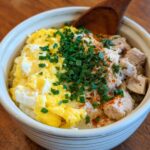
Delicious Recipe
- Prep Time: 15 minutes
- Cook Time: 10 minutes
- Total Time: 25 minutes
- Yield: 2 servings 1x
- Category: Main Course
- Method: Frying
- Cuisine: Japanese
Description
Oyakodon is a classic Japanese chicken and egg rice bowl featuring tender chicken thighs simmered with onions in a savory dashi-based sauce, topped with softly cooked eggs and fresh mitsuba parsley. This comforting one-pot meal is quick to prepare and perfect for a satisfying lunch or dinner.
Ingredients
Main Ingredients
- ½ onion (4 oz, 113 g; peeled)
- 10 oz boneless, skinless chicken thighs (1–2 thighs)
- 1 Tbsp sake (for marinating the chicken)
- 3-4 large eggs (50 g each, at room temperature)
Seasonings
- ½ cup dashi (Japanese soup stock)
- 2 Tbsp soy sauce
- 2 Tbsp mirin
- 2 tsp sugar
For Serving
- 2 servings cooked Japanese short-grain rice (approximately 3⅓ cups, 500 g cooked rice)
- 4 sprigs mitsuba (Japanese parsley) or green onion/scallion
- Shichimi togarashi (Japanese seven spice) – optional
- Japanese sansho pepper – optional
Instructions
- Prepare Seasonings: Combine ½ cup dashi, 2 tablespoon soy sauce, 2 tablespoon mirin, and 2 teaspoon sugar in a bowl and mix until sugar dissolves.
- Prep Ingredients: Slice ½ onion lengthwise into ¼ inch (6 mm) strips. Chop 4 sprigs mitsuba roughly. Trim fat from chicken thighs and cut into ¾–1 inch square pieces using sogigiri slicing technique. Marinate chicken with 1 tablespoon sake for 5 minutes.
- Prepare Eggs: Crack 3-4 large eggs into a bowl and gently cut the whites 5-6 times with chopsticks to create marble patterns without fully whisking.
- Cook Onions and Chicken: In a medium frying pan with stove off, place onions in a single layer and pour the seasoning mixture to cover. Heat over medium until simmering, then add chicken evenly. Lower heat to medium low and cook uncovered for 5 minutes, flipping chicken halfway, until chicken is cooked and onions softened.
- Add Eggs in Two Stages: Increase heat to medium. Drizzle two-thirds of the eggs in a circular pattern over chicken and onions, avoiding edges. When eggs are slightly set but still runny, add remaining eggs and sprinkle mitsuba on top. Cook on medium low until eggs reach desired doneness, typically softly set and still slightly runny.
- Serve: Portion cooked Japanese rice into bowls. Slide chicken and egg mixture atop rice and drizzle additional pan sauce as desired. Garnish with optional shichimi togarashi and sansho pepper if using.
Notes
- Use an oyakodon pan or small frying pan for individual servings for easier sliding onto rice bowls.
- For vegan/vegetarian versions, substitute chicken with plant-based meat alternatives and eggs with vegan egg substitutes like JUST Egg.
- Raw eggs are traditionally safe in Japan; cook eggs to your preference based on local egg safety.
- Adjust seasoning quantities if using a larger pan to ensure onions are properly covered by liquid.
- Leftovers can be refrigerated in an airtight container for up to 2-3 days.
- Use freshly cooked, warm Japanese short-grain rice for best flavor and texture.
Nutrition
- Serving Size: 1 bowl
- Calories: 537 kcal
- Sugar: 11 g
- Sodium: 1197 mg
- Fat: 13 g
- Saturated Fat: 4 g
- Unsaturated Fat: 8 g
- Trans Fat: 0.1 g
- Carbohydrates: 50 g
- Fiber: 1 g
- Protein: 42 g
- Cholesterol: 414 mg


Leave a Reply