
There’s something about a sizzling skillet filled with vibrant veggies and tender meat that just feels like a hug on a plate. This Beef Stir-Fry with Vegetables Recipe is exactly that comforting, crave-worthy dish with layers of flavor and textures that keep you coming back for more.

Why You'll Love This Recipe
I’ve made countless stir-fries over the years, and this particular Beef Stir-Fry with Vegetables Recipe quickly became a go-to for busy weeknights and impromptu dinner guests. It’s flavorful, fast, and flexible—plus, it gives you that authentic wok-char flavor that feels like you ordered takeout, but way better because you made it yourself.
- Quick Cooking Time: Prep and cooking comes together in about 40 minutes, perfect for a satisfying meal that doesn’t keep you waiting.
- Fresh Vibrant Vegetables: The crunch from bok choy, snap peas, and mushrooms keeps each bite lively and nutritious.
- Tender, Juicy Beef: A quick marinade and high-heat searing lock in flavor and tenderness, no chewy bites here.
- Customizable Sauce: A savory yet slightly sweet sauce that you can tweak to your taste, making it your own signature dish.
Ingredients & Why They Work
Everything in this recipe plays a role. The combination of meat, veggies, and sauce ingredients balances taste and texture beautifully. Here’s a quick rundown of the key players and why they shine:

- Flank Steak: Thinly sliced flank steak cooks fast and remains tender when marinated, ideal for stir-fry.
- Cornstarch: Used in the marinade and slurry, it helps create a silky, glossy sauce and keeps beef juicy.
- Neutral Oil: Vegetable or canola oil withstand high heat without smoking too quickly—crucial for a good sear.
- Bok Choy: Adds a crisp, slightly sweet crunch that wilts just right when stir-fried.
- Bunashimeji (Beech Mushrooms): Their firm texture soaks up sauce nicely without turning soggy.
- Sugar Snap Peas: Sweet and crisp, they add freshness and color to the dish.
- Soy Sauces: The combination of light and dark soy brings savory depth and color.
- Oyster Sauce: Brings a subtle umami boost that ties the flavors together.
- Shaoxing Wine: Adds a faint aromatic layer and brightness to the stir-fry.
- Ginger and Garlic: Classic aromatics that wake up the dish with their pungent warmth.
Make It Your Way
I love making this my own by swapping veggies or adjusting the spice level. You can easily customize it based on what’s in your fridge or your mood—this recipe is forgiving and flexible.
- Vegetable Swap: I’ve tried it with bell peppers, broccoli, or baby corn instead of snap peas, and it’s always delicious. Feel free to experiment with whatever veggies you like.
- Spice It Up: Adding a spoonful of chili garlic sauce or fresh chopped chilies turns this into a fiery favorite if you like heat.
- Make it Gluten-Free: Swap soy sauces for tamari, and use gluten-free oyster sauce to suit dietary needs.
- Protein Alternatives: Sometimes I swap beef for thinly sliced chicken or tofu to keep things interesting.
Step-by-Step: How I Make Beef Stir-Fry with Vegetables Recipe

Step 1: Marinate the Beef
Start by mixing the beef slices with cornstarch, oil, water, and a pinch of baking soda. The baking soda tenderizes the meat, making it wonderfully soft. I always let it sit for at least 30 minutes, but if you have time, marinate it overnight in the fridge for extra tenderness. This step makes a huge difference, trust me.
Step 2: Prep Your Veggies and Sauce
While the beef marinates, wash and cut your bok choy, mushrooms, and snap peas into bite-sized pieces. Then whisk together the warm water (or stock), soy sauces, oyster sauce, sesame oil, and sugar. This sauce is what brings everything together, so give it a quick taste and adjust if needed.
Step 3: Sear the Beef
Heat your wok on high until it’s just starting to smoke—this is key for that perfect sear. Coat the wok’s edges with 2 tablespoons of oil, then spread the beef evenly in one layer. Leave it alone for about 30 seconds so it caramelizes without steaming. Flip and sear the other side for 30 seconds, then remove and set aside. The beef shouldn't be completely cooked yet, about 80% done.
Step 4: Stir-Fry the Vegetables & Aromatics
Add the remaining oil to the wok, then quickly cook the ginger for about 10 seconds before adding garlic. Toss in the mushrooms next and stir-fry for 15 seconds so they get a nice sear. Pour in the Shaoxing wine to deglaze the wok and add depth. Then toss in the snap peas and bok choy, stir-frying on high until the greens just start to soften—usually about 20 seconds.
Step 5: Finish with Sauce and Beef
Pour your prepared sauce over the veggies, then toss the beef back into the wok. Bring everything back up to a simmer, then swirl the wok so the edges superheat—this helps develop that sought-after wok hei flavor. Lastly, stir in the cornstarch slurry quickly to thicken the sauce. Keep stirring until everything is coated evenly—there should be no watery sauce pooling at the bottom.
Serve immediately—you’re in for a tasty, textured dish that’s got punchy flavors and loads of satisfaction!
Top Tip
From countless stir-fry sessions, I’ve learned a few tricks that can truly elevate your Beef Stir-Fry with Vegetables Recipe. These simple steps save you time and guarantee delicious results every time.
- Prep Everything First: Stir-frying moves fast, so have all your ingredients chopped and ready before heating your wok—this prevents burning and keeps flavors fresh.
- Don’t Crowd the Pan: Cooking too much beef or veggies at once steams rather than sears them, so if your wok isn’t big enough, cook in batches for the best caramelization.
- High Heat is Key: A super-hot wok ensures quick cooking and that signature smoky flavor. Don’t rush this step—let your wok heat fully before adding ingredients.
- Cornstarch Magic: The cornstarch slurry thickens the sauce beautifully and gives it that glossy coat that sticks to every bite—don’t skip it!
How to Serve Beef Stir-Fry with Vegetables Recipe
Garnishes
I love sprinkling toasted sesame seeds and freshly chopped scallions on top before serving. They add a little crunch and a pop of color that feels fresh. Sometimes a dash of chili oil or a few cilantro leaves elevate the whole experience, especially if you like a bit of heat or herbal brightness.
Side Dishes
Steam jasmine rice or fluffy basmati pairs perfectly with this stir-fry to soak up that savory sauce. For a lighter option, I sometimes serve it with cauliflower rice or simple steamed noodles tossed in a splash of soy.
Creative Ways to Present
For special dinners, I’ve served this stir-fry in individual hot stone bowls or even on a bed of crispy fried rice cakes to add texture surprises. A vibrant platter with edible flowers and chopped nuts can wow guests and impress without extra fuss.
Make Ahead and Storage
Storing Leftovers
I store leftovers in an airtight container in the fridge for up to 2 days. The veggies stay fairly crisp, but I recommend reheating gently to avoid overcooking the bok choy.
Freezing
You can freeze this stir-fry, but I prefer fresh-cooked because the texture of the vegetables and beef changes a bit after thawing. If you must freeze, flash cool, pack well, and avoid freezing for more than a month.
Reheating
I reheat leftovers in a hot skillet or wok with a splash of water or broth to loosen the sauce, stirring quickly to avoid softening the veggies too much. Microwaving is quicker but tends to make the vegetables limp.
Frequently Asked Questions:
Yes! While flank steak is ideal due to its flavor and texture, you can also use sirloin or skirt steak. Just slice thinly against the grain and marinate similarly to keep it tender.
Baking soda raises the pH of the meat’s surface, which helps break down proteins and makes the beef more tender and less chewy after cooking.
Absolutely! Substitute the beef with firm tofu or tempeh and use vegetable stock in place of beef stock. Keep the veggies and sauce as is, or add other favorites like bell peppers or baby corn.
Cook vegetables on the highest heat possible and for a short time only, stirring constantly. Also, don’t overcrowd your pan, and add the sauce only at the end to keep veggies crisp.
Final Thoughts
This Beef Stir-Fry with Vegetables Recipe feels like a little celebration of everyday ingredients. It’s a hands-on, quick, and truly satisfying dish that I’ve made enough times to know it never disappoints. Whether you’re cooking for yourself or feeding loved ones, give this recipe a whirl—I’m sure it’ll find a special spot in your rotation just like it did in mine. Plus, you get to enjoy a gorgeous meal that’s packed with nutrition, flavor, and a memorable one-pan magic. Go ahead, stir it up!
Print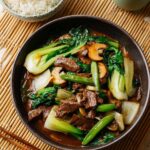
Beef Stir-Fry with Vegetables Recipe
- Prep Time: 30 minutes
- Cook Time: 10 minutes
- Total Time: 40 minutes
- Yield: 3 servings 1x
- Category: Main Course
- Method: Stovetop
- Cuisine: Chinese
Description
A flavorful and quick Beef Stir-Fry with Vegetables featuring tender flank steak, bok choy, mushrooms, and snap peas in a savory sauce. Perfect for a satisfying weeknight meal.
Ingredients
Beef and Marinade
- 12 ounces flank steak, sliced ⅛-inch thick into 2-3 inch pieces
- 1 teaspoon cornstarch
- 2 teaspoons neutral oil
- 1 teaspoon water
- ¼ teaspoon baking soda
Vegetables
- 4 cups bok choy, cut into 1x3-inch pieces, washed and drained
- ¾ cup Bunashimeji or Beech mushrooms, washed and drained
- ¾ cup sugar snap peas or snow peas, washed and drained
Sauce
- ½ cup warm water (or beef stock or chicken stock)
- ¼ teaspoon sesame oil
- 2 teaspoons light soy sauce
- 1 teaspoon dark soy sauce
- 1 tablespoon oyster sauce
- ¼ teaspoon sugar
Additional Ingredients
- 3 tablespoons neutral oil, divided
- ½ teaspoon minced ginger
- 2 cloves garlic, finely minced
- 1 tablespoon Shaoxing wine
- 2 teaspoons cornstarch mixed with 1 tablespoon water (slurry)
Instructions
- Marinate the Beef: Mix the flank steak with 1 teaspoon cornstarch, 2 teaspoons neutral oil, 1 teaspoon water, and ¼ teaspoon baking soda until well-coated. Set aside for at least 30 minutes to tenderize and absorb flavors.
- Prepare the Vegetables: Cut and wash bok choy, mushrooms, and snap peas. Set aside for quick stir-frying.
- Make the Sauce: In a small bowl, combine ½ cup warm water (or stock), ¼ teaspoon sesame oil, 2 teaspoons light soy sauce, 1 teaspoon dark soy sauce, 1 tablespoon oyster sauce, and ¼ teaspoon sugar. Stir well to mix.
- Cook the Beef: Heat a wok over high heat until lightly smoking. Add 2 tablespoons of oil and spread evenly. Add the marinated beef in an even layer, sear for 30 seconds, then turn and sear the other side for 30 seconds until about 80% cooked. Remove beef and turn off heat.
- Cook Aromatics and Mushrooms: Return heat to high; add remaining 1 tablespoon oil and minced ginger. Cook for 10 seconds, then add minced garlic and cook 5 seconds more. Add mushrooms and stir-fry for 15 seconds to sear them. Pour in Shaoxing wine.
- Add Vegetables: Add snap peas and bok choy; stir-fry for 20 seconds on highest heat until bok choy begins to wilt.
- Combine Sauce and Beef: Pour in the prepared sauce, then return the beef to the wok. Gather ingredients in the center. Once simmering and the wok sides are super-heated, stir in a circular motion so ingredients hit the wok’s sides.
- Thicken the Sauce: Pour cornstarch slurry into the center while stirring quickly. The sauce will thicken immediately. Stir for another 20 seconds to coat beef and vegetables evenly with the sauce. Serve immediately.
Notes
- Marinate the beef longer or overnight for more tenderness and flavor.
- You can substitute the vegetables with any quick-cooking options like bell peppers, broccoli, or carrots.
- Use neutral oil with high smoke point such as vegetable, canola, or avocado oil for best stir-fry results.
- Adjust the number of soy sauces to your taste preference for saltiness and color.
- Serve with steamed rice or noodles for a complete meal.
Nutrition
- Serving Size: 1 serving
- Calories: 377 kcal
- Sugar: 4 g
- Sodium: 797 mg
- Fat: 23 g
- Saturated Fat: 6 g
- Unsaturated Fat: 17 g
- Trans Fat: 0 g
- Carbohydrates: 12 g
- Fiber: 3 g
- Protein: 29 g
- Cholesterol: 68 mg

Leave a Reply